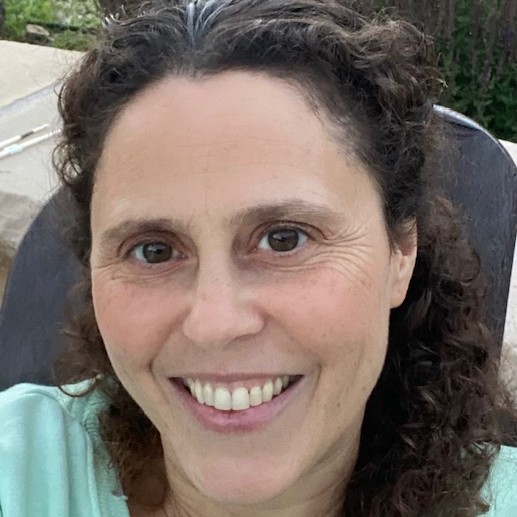
Leora Lambert
Credentials
Licensed in Israel
Finances
- Ra'anana
 Verified
Credentials
Social Worker
LMSW
Finances
350-500 NIS
None
N/A
ABOUT THE THERAPIST
I believe that everyone is born with their own unique personality and temperament and it is how they interact with their environment that makes all the difference. In my DBT- informed practice, clients learn the skills to regulate emotions, tolerate stress, build and maintain relationships, mindfulness and develop self awareness.
My primary approach utilizes Dialectical Behavioral Therapy. DBT is a form of Cognitive Behavioral Therapy that is a proven and effective treatment to help children, teens and young adults manage their emotions. Through DBT skills, clients learn to better understand the reasons behind their behaviors and better manage their big emotions while building and maintaining their relationships. In addition, I use a psychodynamic approach to help clients better understand themselves, discover what motivates them and the reasons behind their behaviors.
I am skilled at helping children, teens and young adults with anxiety, depression, ADHD, PTSD, emerging Borderline Personality Disorder and School Related Behavioral Issues.
My role as a therapist is to help my clients understand who they are, learn what motivates them and help them reduce their suffering. I believe that DBT and its skills are highly effective in guiding clients to make good choices and thereby create the life that they want. In our work together, I provide in the moment "Skills Coaching" which allows you to reach out to me in challenging times so that we can work together to help you use the DBT skills to work through a real life situation. The aim is for you to live a calmer, more balanced life where you can achieve your goals.
With children and young adults, I teach the skills to both the child and the parents so that they can "speak" the same language to create a regulated home and communicate effectively. I believe that once a regulated home is established, the child is better able to manage their emotions and the world they live in. I believe that parental partnership is key to the child's success. I am licensed in both New York and Israel and have a private practice in Ra'anana. In addition, I am available for virtual visits.
QUALIFICATIONS
LMSW
Columbia University
1996
Degree
LMSWEducation
Columbia UniversityYear of Graduation
1996Years in Practice
20
LICENSED IN ISRAEL
Registered Social Worker in Israel
48733
LICENSED IN THE USA
DISTANCE COUNSELING
Online Therapy
PRIMARY SPECIALTIES
Anxiety / Panic
Attention Deficit Hyperactivity Disorder (ADHD)
Borderline Personality Disorder
Depression
Parenting Issues / Training
ADDITIONAL SPECIALTIES
Addictions
Eating Disorders
Family Issues
Learning Disabilities
Trauma / Post Traumatic Stress Disorder PTSD
CLIENT FOCUS
Population
Children
Adolescents
Young Adults
Languages Spoken
English
Native Language
English
TREATMENT APPROACH
Dialectical Behavior Therapy (DBT)Dialectical Behavior Therapy (DBT) is a type of cognitive-behavioral therapy developed by Marsha Linehan to help people learn to better manage and cope with emotions and stress. It focuses on developing skills and strategies to help regulate emotions, improve relationships and communication, and reduce self-destructive behaviors. Through DBT, people learn to identify and modify unhealthy thoughts and behaviors, while also learning to accept and validate their own feelings. DBT teaches skills to help individuals become aware of and accept and regulate their emotions, tolerate distress, and improve interpersonal relationships.
Psychodynamic TherapyPsychodynamic therapy is a form of therapy that focuses on the unconscious mind and how it affects behavior. It works to help people understand and work through past experiences and feelings that may be causing difficulties in the present. This type of therapy encourages individuals to explore their emotions, relationships, and behaviors in order to gain insight into their current difficulties. It can help individuals better understand themselves and their motivations, and gain insight into how past events have impacted their current lives. People tend to develop defense mechanisms when faced with challenges in life. Defense mechanisms may keep painful feelings, memories, and experiences in the unconscious. A few common defense mechanisms include: denial, repression, and rationalization. Psychodynamic therapists encourage people to speak freely about their emotions, desires, and fears. Being open may help uncover vulnerable feelings that have been pushed out of conscious awareness. According to psychodynamic theory, behavior is influenced by unconscious thought. Once painful feelings are brought forth and processed, the defense mechanisms are no longer needed and a person in treatment can start changing unhelpful patterns when coping with life’s challenges.
SERVICES OFFERED
Individual Therapy
Workshops/Educating