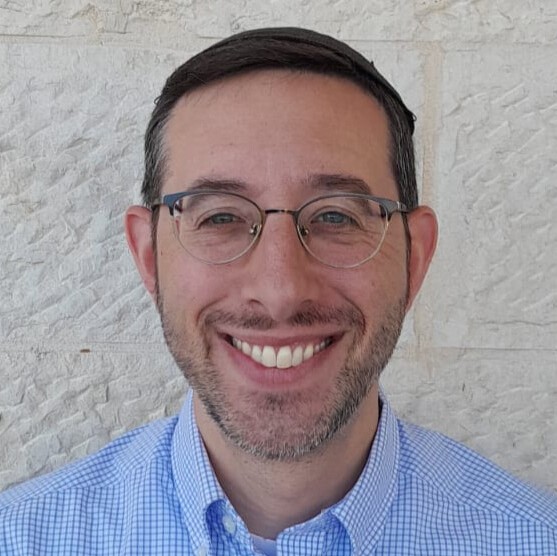
Yonatan Schechter
Credentials
Licensed in Israel
Finances
- Nachal Achziv
- Ramat Beit Shemesh
- 0723925408
- Email Me
- Free Consultation
-
 Business HoursEveningsFridays/Weekends
 Verified
Credentials
Clinical Social Worker, Psychotherapist
MSW, MEd
Finances
350-500 NIS
N/A
Sliding Scale | Free Consultation

ABOUT THE THERAPIST
I support individuals and couples working through relationship struggles, mental health challenges, and personal difficulties, offering a non-judgmental space to develop greater self-understanding and positive change.
In my practice you will find a non-judgmental space where you can speak freely about your experiences and the challenges that you face - whether it is depression, anxiety, addiction, abuse, infidelity, trauma or strained relationships.
I believe in integrating various therapeutic modalities to best serve each client's unique needs. So while my primary approach focuses on understanding connections between current functioning and past experiences and relationships, I also draw upon behavioral approaches, such as cognitive-behavioral therapy (CBT), to address specific thoughts, behaviors, and patterns that may be causing distress.
I am also trained in Internal Family Systems (IFS), a transformative approach that helps individuals connect with their inner selves and navigate conflicts within their internal system.
If you have experienced trauma, we may discuss the complexities and effects that trauma can have on your life
Together, we will work towards gaining insight, developing coping strategies, and fostering meaningful and lasting changes that enable you to live a more fulfilling life.
I am skilled at helping adults who are still carrying the impact of childhood abuse, neglect, or other difficult early experiences. I understand how early experiences can impact adult relationships, self-esteem, and overall well-being, and I provide a safe, non-judgmental space for healing and growth.
Additionally, I am skilled in helping individuals navigate relationship challenges, whether they involve romantic partnerships, family, friendships, or workplace relationships. This often means addressing patterns that keep repeating, improving communication and connection, or finding clarity about individual needs.
My role in your therapy is to be a facilitator. As a facilitator, I help guide the therapeutic process while keeping you at the center, recognizing that you are the expert on your own experiences. Together, we’ll clarify your goals at the start of therapy to give our sessions a clear direction, and we’ll revisit those goals regularly to make adjustments as needed. This approach ensures that therapy remains effective, collaborative, and respectful of the time and resources you invest.
I am committed to providing quality service to each of my clients. To that end, I consult regularly with experienced professionals who have many years of expertise in therapy and clinical supervision. This collaborative approach ensures that the interventions I provide are evidence-based, clinically sound, and tailored to each client's unique needs, while also helping to identify and address any potential blind spots in my clinical work.
Additionally, I dedicate dozens of hours each year to professional development through specialized trainings and continuing education. This commitment allows me to stay current with the latest research in psychology and psychotherapy, enabling me to better understand my clients' experiences and provide them with the most effective support possible.
QUALIFICATIONS
MSW
New York University
2011
MEd
Yeshiva University
2009
Degree
MSWEducation
New York UniversityYear of Graduation
2011Degree
MEdEducation
Yeshiva UniversityYear of Graduation
2009Years in Practice
10
LICENSED IN ISRAEL
Registered Social Worker in Israel
30093
LICENSED IN THE USA
ADDITIONAL CREDENTIALS
IFS - Level 1, 2023
Brainspotting Phase 1 - Erena DiGonis, LCSW, PLLC - 2024
Emotionally Focused Therapy - The International Centre for Excellence in Emotionally Focused Therapy - 2025
DISTANCE COUNSELING
Online Therapy
BLOG POSTS
.png)
Aliya: Dreaming the Dream vs. Living the Reality
After dreaming it, planning it, and making it happen, why does it feel harder than expected?

Homesick in the Holy Land?
Why even the most idealistic olim may struggle emotionally after fulfilling their dream of aliya.
.png)
Opening the Emotion Valve: Challenges and Strategies
Emotional growth is hard-won, but with the right approach, it is within anyone's reach.
.png)
The Emotion Valve
When someone is friendly, capable, and well-liked yet can't seem to make a relationship work, the answer may lie not in who they are today, but in who they had to become in childhood.
.png)
From Good Intentions to Real Connection (Part 3 of Winter Series 5786)
When couples find themselves trapped in conflict despite good intentions, the path forward begins within.
.png)
From “He Said, She Said” to “He Felt, She Felt” (Part 2 of Winter Series 5786)
Beneath most heated exchanges lie deeper feelings waiting to be understood.
.png)
The Art of Communicating Honestly and Responsibly (Part 1 of Winter Series 5786)
Expressing feelings in marriage is essential, but it must be done honestly and responsibly to strengthen rather than damage your relationship.
.png)
Why You Should Go to Sleep Angry
Contrary to popular wisdom, going to sleep angry is often the best strategy for couples in conflict. Time and rest allow emotions to settle and perspective to return, making successful reconciliation far more likely than late-night attempts when both parties are exha...
.png)
Lesson from a Construction Site: Don't Dismiss the Scaffolding in Your Relationships
Marriages, like buildings, sometimes need scaffolding - temporary, unglamorous interventions - that provide the platform needed to repair damage and build a strong, lasting structure.
.png)
Communicating for Connection
A key task for couples is learning to express their needs explicitly, rather than expecting their spouse to read between the lines.
.png)
4 Ways NOT to Apologize to Your Spouse
Couples occupy the same spaces, literally and figuratively, and it’s inevitable that they will clash or disappoint each other from time to time. When that happens, an apology is a major part of making amends. Here are some of the most common mistakes made when apol...
PRIMARY SPECIALTIES
Couples / Relationship / Marriage Counseling
Depression
Life Transitions
Sexual Abuse / Rape
Trauma / Post Traumatic Stress Disorder PTSD
ADDITIONAL SPECIALTIES
Abuse
Addictions
Adjustments
Alcohol Abuse
Anxiety / Panic
Domestic Violence
Drug Abuse
Self-Esteem
CLIENT FOCUS
Population
Couples
Men
Languages Spoken
English
Hebrew
Native Language
English
TREATMENT APPROACH
Brainspotting (BSP)Brainspotting is a form of psychotherapy that uses eye positioning and body-based approaches to help people identify, process, and release emotional and physical distress. It is based on the idea that the body and mind are interconnected and that certain eye positions can help access and release stuck, unresolved emotions. Practitioners help clients reprocess negative events and retrain emotional reactions by guiding clients’ eyes, with a pointer, across their field of vision to find “brainspots”. Brainspots are eye positions that activate a painful emotion or trauma. Through the use of bilateral sound and/or vibration, the therapist helps the client to access and process difficult or traumatic memories and emotions, leading to lasting and positive changes in behavior and well-being.
Emotion-Focused TherapyEmotion-focused therapy (EFT) is a type of psychotherapy that is based on the idea that emotions play a key role in a person’s mental health. EFT focuses on helping people to identify, accept, and manage their emotions in a healthy and productive way. The goal of EFT is to help people identify and express their emotions, understand how those emotions impact their behavior, and learn how to manage their emotions in a way that is adaptive and healthy. EFT is a research-based approach to psychotherapy that has been found to be effective in helping people manage a variety of mental health conditions. It has been used successfully in the treatment of individuals, couples, and families, as well as with groups. EFT is particularly beneficial for people who struggle with emotional regulation, mood disorders, anxiety, trauma, and relationship issues.
Internal Family Systems (IFS)Internal Family Systems (IFS) is an evidence-based psychotherapy that uses the metaphor of an internal family of parts to help people gain awareness of how different parts of themselves can interact in healthy and unhealthy ways. IFS encourages people to become curious about their different parts, with the goal of helping them gain access to their true Self or core. Through this process, people can learn to recognize and care for the different parts of themselves, as well as develop compassionate understanding for the origins of their parts. A key principle of IFS is that each part within the person has its own positive intention and is trying to protect the person in some way. By understanding the positive intention of each part, the practitioner and client can work together to help the parts feel heard and understood, and to find more adaptive ways of meeting their needs. IFS has been found to be an effective treatment for a variety of mental health issues, including depression, anxiety, trauma, and relationship issues.
Psychodynamic TherapyPsychodynamic therapy is a form of therapy that focuses on the unconscious mind and how it affects behavior. It works to help people understand and work through past experiences and feelings that may be causing difficulties in the present. This type of therapy encourages individuals to explore their emotions, relationships, and behaviors in order to gain insight into their current difficulties. It can help individuals better understand themselves and their motivations, and gain insight into how past events have impacted their current lives. People tend to develop defense mechanisms when faced with challenges in life. Defense mechanisms may keep painful feelings, memories, and experiences in the unconscious. A few common defense mechanisms include: denial, repression, and rationalization. Psychodynamic therapists encourage people to speak freely about their emotions, desires, and fears. Being open may help uncover vulnerable feelings that have been pushed out of conscious awareness. According to psychodynamic theory, behavior is influenced by unconscious thought. Once painful feelings are brought forth and processed, the defense mechanisms are no longer needed and a person in treatment can start changing unhelpful patterns when coping with life’s challenges.
Trauma-Focused Cognitive Behavioral Therapy (TF-CBT)Trauma-Focused Cognitive Behavioral Therapy (TF-CBT) is an evidence-based practice used to help children, adolescents and their parents who have experienced a single or multiple traumatic events. This type of therapy combines cognitive and behavioral strategies to help people process their traumatic experiences, manage their distress, develop coping skills, and restore their sense of safety and well-being. TF-CBT focuses on education and skill-building, creating an environment of safety and trust, and using therapeutic activities to help people understand their responses and control their symptoms. Children are shown how perceptions may be distorted and are given the tools to redesign those perceptions. TF-CBT is a skills-based model, and it requires the child and parent to practice its components in order to be optimally effective. Parents and children are commonly asked to practice skills at home.
SERVICES OFFERED
Individual Therapy
Couples Therapy
BLOG POSTS
Aliya: Dreaming the Dream vs. Living the Reality
After dreaming it, planning it, and making it happen, why does it feel harder than expected?
Homesick in the Holy Land?
Why even the most idealistic olim may struggle emotionally after fulfilling their dream of aliya.
Opening the Emotion Valve: Challenges and Strategies
Emotional growth is hard-won, but with the right approach, it is within anyone's reach.
The Emotion Valve
When someone is friendly, capable, and well-liked yet can't seem to make a relationship work, the answer may lie not in who they are today, but in who they had to become in childhood.
From Good Intentions to Real Connection (Part 3 of Winter Series 5786)
When couples find themselves trapped in conflict despite good intentions, the path forward begins within.
From “He Said, She Said” to “He Felt, She Felt” (Part 2 of Winter Series 5786)
Beneath most heated exchanges lie deeper feelings waiting to be understood.
The Art of Communicating Honestly and Responsibly (Part 1 of Winter Series 5786)
Expressing feelings in marriage is essential, but it must be done honestly and responsibly to strengthen rather than damage your relationship.
Why You Should Go to Sleep Angry
Contrary to popular wisdom, going to sleep angry is often the best strategy for couples in conflict. Time and rest allow emotions to settle and perspective to return, making successful reconciliation far more likely than late-night attempts when both parties are exha...
Lesson from a Construction Site: Don't Dismiss the Scaffolding in Your Relationships
Marriages, like buildings, sometimes need scaffolding - temporary, unglamorous interventions - that provide the platform needed to repair damage and build a strong, lasting structure.
Communicating for Connection
A key task for couples is learning to express their needs explicitly, rather than expecting their spouse to read between the lines.
4 Ways NOT to Apologize to Your Spouse
Couples occupy the same spaces, literally and figuratively, and it’s inevitable that they will clash or disappoint each other from time to time. When that happens, an apology is a major part of making amends. Here are some of the most common mistakes made when apol...