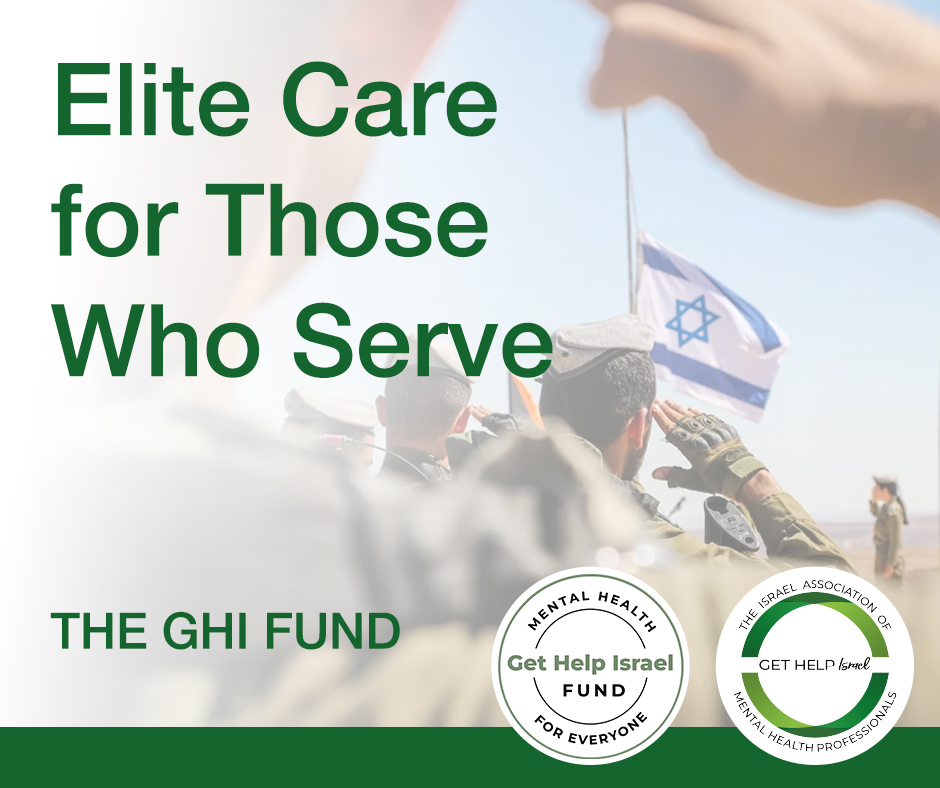
The GHI Fund proudly support soldiers, lone soldiers, and active reservists in funding trauma therapy via private practice multilingual therapists to provide imminent specialized care. Soldiers can select their own therapist through our database of participating therapists.

Why Grownups Should Play Too
By: Rachel Ozick…as we get older, we stop playing. We feel the need to be productive or we feel so tired from our productive lives that we pursue mindless ways to relax and shut down, like watching TV, but watching TV is not playing, and playing is more important than you think.
Read More.png)
Intergenerational Trauma in Times of Crisis: Echoes of the Holocaust in the Present
By: Jeanne LankinIntergenerational trauma refers to the transmission of trauma responses from one generation to future generations including patterns of coping and survival strategies. In the case of children and grandchildren of Holocaust survivors, trauma may have been communicated not only through shared or unspoken stories but through the emotional messages communicated in the home including generalized fear, silence, secrecy, overprotection, familial dysfunction and vigilance.
Read More.png)
Communicating for Connection
By: Yonatan SchechterA key task for couples is learning to express their needs explicitly, rather than expecting their spouse to read between the lines.
Read More
What Makes Us Miss Relationship Red Flags?
By: Micki Lavin-PellHave you come out of a relationship recently where you feel like banging your head against a wall because yet again you’ve dated someone who turned out to be a bad apple? So you go into this mantra of telling yourself there must be no good people to date, because everyone you go out with ends badly.
Your dating pattern may look something like this. You meet someone, they make you feel really good in the beginning, they treat you nicely, take you to nice places and show you a good time. Then slowly they show less interest in you. Maybe they distance themselves from you, start saying things that are hurtful, or seem to care less about your opinion?

Good Therapy is a Change in Scenery: Insights from the Other Side of the World
By: Robin B. ZeigerEvery once in a while, important insights for my known world reveal themselves from the most unusual of places. My recent trip to the Far East: Myanmar and Thailand gifted me new insights and inspirations as a Jungian analyst. My mantra became, Good therapy is a change in scenery. In the safety of the therapist’s temenos (a beautiful Jungian term for the sanctity of the therapy space), patients meet the messages of the unconscious often for the first time. And in meeting these unknown voices and images, our inner and outer worlds transform themselves into newness and rebirth.
Read More.png)
The Hidden Layers: A Therapist's Guide to Understanding Trauma
By: Yisroel PickerJust like an onion, trauma has many layers. What you see on the surface is rarely the full story, and true healing often begins when we start peeling back the "how," "who," "where," "when," and "why" behind the "what." This article explores the powerful onion metaphor in understanding trauma, revealing how a deeper look can lead to profound transformation. Discover why exploring every layer is essential for both clinicians and those on their healing journey.
Read More.png)
Mindfulness in Therapy: More Than Just Breathing
By: Liron Kranzler
How mindfulness-based practices help you navigate overwhelm and pain, and come home to yourself.
Read More

Making Space for Personal Growth
By: Robert NewmanBeing too busy is a dis-ease of modern society
Read More
At Home Therapeutic Art Activities for Children During Global Pandemic
By: Sara FeinbergDuring challenging times, it is important to encourage children to express how they are feeling. Children often have difficulty articulating their emotions verbally- communicating through art or play is a great alternative. This can serve as a cathartic release, empower them, and help them process new circumstances.
Read More
Ways to Manage Worry Instead of it Managing You – Part One
By: Daniel BaumMy goal, after you finish reading this blog is that you will get a more comprehensive understanding of toxic worry and the tools to help you manage it better. Managing your worrying in a healthier way will allow you to free yourself, increase your energy level and give you a greater ability to love yourself and others. Worry only inhibits the expression of love.
Read More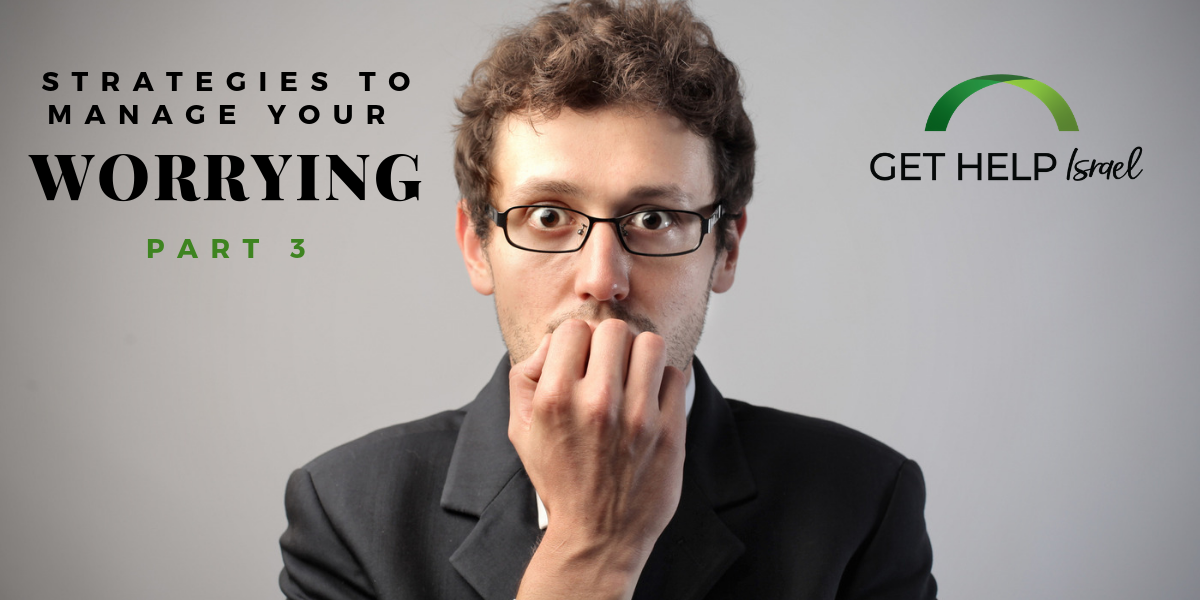
Ways to Manage Worry Instead of it Managing You – Part THREE
By: Daniel BaumWorry! Ways to Manage Worry Instead of it Managing You
Part Three
Strategies to Help you Manage your Worrying
I am glad you are back again to read the final part of my blog Worry! Ways to Manage Worry Instead of it Managing You. In part three of my blog I will give you some specific strategies to help you manage your worrying.
Here are some specific strategies and tools that can help you avoid toxic worry. Let’s get to it shall we!
Hallowell’s Strategies of Managing Worry
Vulnerability Just Ahead
By: Nancy SchwartzIs feeling vulnerable a good thing? Many of us see it as a sign of weakness, as we’re not being good enough!! We’re afraid of not being seen by others as the “perfect” mother/father, spouse, child, worker, etc.
Read More
Fundamentals of Trauma Recovery, Part 8/8
By: Chava LedererBy tackling pieces of your recovery to tackle that are ever-so-small, you ensure your success; this will build greater self-confidence and foundations for each further success.
Read More
Feeling Helpless? Here Are 3 Corona (or Anytime) Coping Skills
By: Daniel FundIt can happen at any time or place. But especially now, with the impact of COVID-19 still being felt here in Israel even as things are finally opening up, it's an expected emotion to be feeling. Helplessness. And we are all in it together. Including your therapist. What can you do when you feel like this? Here are 3 powerful skills I know of.
Read More
Is Anxiety Killing Your Chances of Finding Love?
By: Micki Lavin-PellAnna, a 35-year old, slim, petite and attractive brunette woman from Miami Beach had been…
Read More
Fundamentals of Trauma Recovery, Part 7
By: Chava LedererFinding meaning, creating purpose, and gaining control is a recipe that results in greater resilience and fuller recovery.
Read More.png)
Israel Wartime Anxiety: 3 Emotion-Focused Therapy Tips
By: Daniel FundThe more we turn towards the pain and express unmet needs, and not avoid them, the less anxious we will be.
Read More.png)
The Flip Side of Stress
By: Sasha WeissResearch has shown that when we are able to regulate our emotions in a stressful situation we are able to not only feel calmer but to also become more collaborative, creative and thrive.
Read More
Challenges and Advise for People in Self-Quarantine
By: Linda AvitanSelf-quarantine is a situation that can be very stressful and challenging on many levels to oneself and one's relationships. This post examines the areas which may be challenging in an attempt to legitimize those difficulties. I offer the opportunity to reach out and seek ONLINE help in order to get through this trying period in a positive way.
Read More
Fundamentals of Trauma Recovery, Part 3
By: Chava LedererWhile extremely distressing, flashbacks are actually memories. Registering what is a memory, and what is happening now, is essential.
Read MoreFor Soldiers and Reservists in Active Duty