.png)

The GHI Fund proudly support soldiers, lone soldiers, and active reservists in funding trauma therapy via private practice multilingual therapists to provide imminent specialized care. Soldiers can select their own therapist through our database of participating therapists.

Why Staying Together for the Kids Isn’t Doing Anyone Any Favours
By: Micki Lavin-PellMicki Lavin-Pell, is a marriage and family therapist of 15+ years, married to Gaby Pell for nearly 18 years +4 kids. She specializes in helping couples navigate challenges at different stages of their lives and deal with attachment issues that often plague relationships using Emotionally Focused Couples therapy. She co-hosts a podcast featured on www.Jewishcoffeehouse.com, called Real Relationships and can be found on her website www.mickilavinpell.co.il
Read More.png)
Survivorship Bias: Missing Planes and Missing Data
By: Yisroel PickerSurvivorship bias is like the WWII military only looking at bullet holes in planes that returned, while ignoring the ones that crashed. In the same way, we copy the 'hustle' of famous billionaires and think it’s a blueprint, forgetting the thousands of people who did the exact same thing and failed. If you only look at the survivors, you’re missing the full picture of the risks you’re actually taking. To truly survive, you have to stop obsessing over the winners and start looking at the planes that never made it home.
Read More.png)
New Job Jitters
By: Sasha WeissWhen beginning a new job if you are constantly worried about failing and feeling like you need to prove yourself at every turn that can cause significant stress which will most likely hinder performance. Rather than engendering positive relationships and being open to learning, the fear of someone discovering shortcomings will be so pervasive that it will be very difficult to acclimate to the new position effectively. On the other hand, a growth mindset which encourages you to learn from others, think about mistakes as essential to the process of learning and acclimating and being open to a new way of doing things will lead you to have more joy and energy, feel less anxious, and make a good impression on your colleagues.
Read More
Why Grownups Should Play Too
By: Rachel Ozick…as we get older, we stop playing. We feel the need to be productive or we feel so tired from our productive lives that we pursue mindless ways to relax and shut down, like watching TV, but watching TV is not playing, and playing is more important than you think.
Read More.png)
ADHD or Trauma?
By: Aviva Zahavi-AsaOver the last few decades, many children and adolescents have been receiving a diagnosis of ADHD at alarming rates. ADHD, which is typically understood as a brain or nervous system disorder which tends to be genetic in nature, is often identified when a child shows symptoms of inattention, distractibility, hyperactivity and/or impulsivity. What unfortunately often gets missed with a diagnosis of ADHD, however, is the possibility that traumatic events may be the source of these symptoms.
Read More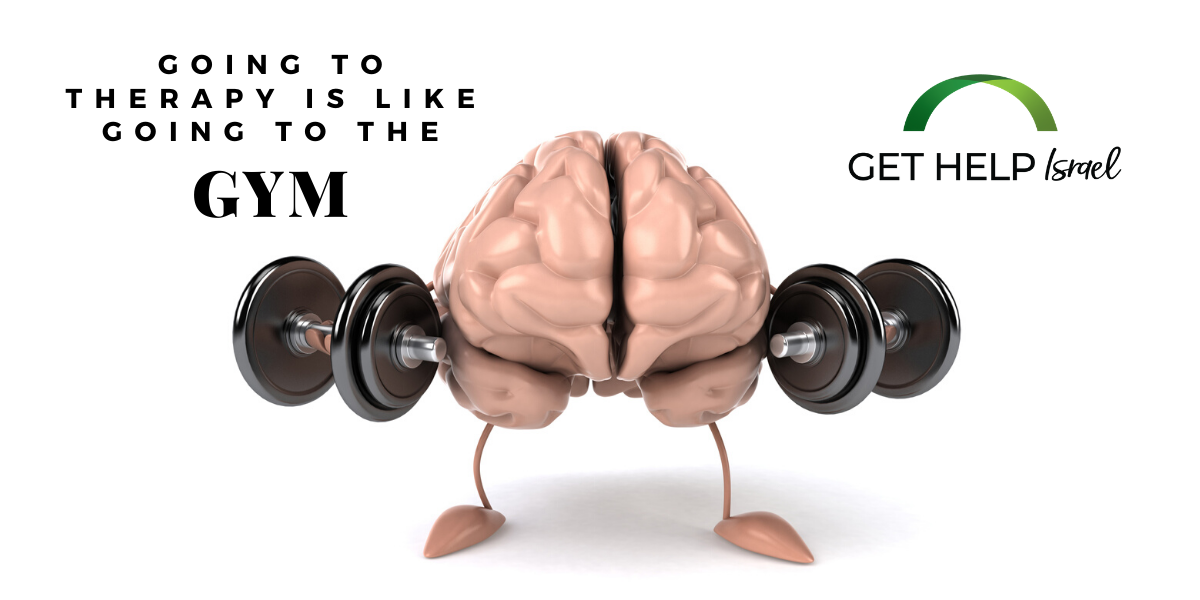
Lets Talk About Therapy The Same Way We Talk About Going To the Gym
By: Keren BurgmanImagine how much easier life would be if therapy was seen simply as a form…
Read More.png)
The Flip Side of Stress
By: Sasha WeissResearch has shown that when we are able to regulate our emotions in a stressful situation we are able to not only feel calmer but to also become more collaborative, creative and thrive.
Read More
10 Ways to Improve a Marriage
By: Naomi SternbergWouldn’t it be wonderful if there were just 10 do it yourself fix it solutions…
Read More.png)
Mindfulness in Therapy: More Than Just Breathing
By: Liron Kranzler
How mindfulness-based practices help you navigate overwhelm and pain, and come home to yourself.
Read More

40 Years of Research: Why Solving Your Marital Disputes is Not the Solution
By: Daniel FundMany couples think that they just need to be able to find an agreement, a compromise, a solution to their disagreements. And that couples' therapy is about solving their disagreements. In fact, for many years this is how couples' therapists approached therapy as well. Unfortunately, this approach failed and statistically, their success rates were very low. But the field of couples therapy research has changed dramatically. In the last 40 years, Dr. John Gottman, Dr. Leslie Greenberg, and Dr. Sue Johnson, to name a few major names have made real breakthroughs, having studied many thousands of couples, watching them closely in action, on live cameras, video, behind one-way glasses and otherwise. One of Gottman's findings is that about 70% of our disagreements as couples, never get solved! And this is true not only for failing couples but for the very successful couples as well! So, if solving problems is not what leads to success, what does? The answer is that as a therapist, I can help them reach such an emotional bond that makes the issue of solving problems redundant, a non-issue. Once they have this bond, they will not necessarily need me to solve their problems. Find out more inside.
Read More
How to Choose the Right Therapist
By: Tanya ProchkoChoosing the right therapist may feel overwhelming. Here are some tips to help guide you.
Read More.png)
4 Ways NOT to Apologize to Your Spouse
By: Yonatan SchechterCouples occupy the same spaces, literally and figuratively, and it’s inevitable that they will clash or disappoint each other from time to time. When that happens, an apology is a major part of making amends. Here are some of the most common mistakes made when apologizing.
Read More
Isolation Has Brought Us Together
By: Elan KartenWe’re in isolation, and isolation has brought us together.
Simmering Soup: On the Importance of Asking Questions
By: Robin B. ZeigerSometimes the question sits on the back burner like low-simmering stew that has all but been forgotten. An innocent question may ignite a fire in a chilly room and we are off in a new direction. Or sometimes it buzzes around like a nasty mosquito.
Read More
In Relationship with Mental Illness
By: Chava LedererIf your spouse suffers from a mental health issue or addiction, there are some concrete steps you can take to improve your life. These are the first pieces of building your relationship.
Read More.png)
Imagination Makes Sense
By: Sara JacoboviciWe are sensory beings, and one of the earliest abilities that we acquire is imagination. Imagination allows us to form mental images of things not currently sensed, simulate possible future scenarios, create novel ideas, and engage in symbolic thinking.
Read More.png)
From “He Said, She Said” to “He Felt, She Felt” (Part 2 of Winter Series 5786)
By: Yonatan SchechterBeneath most heated exchanges lie deeper feelings waiting to be understood.
Read More

My Unorthodox life: Exploring Differences of Opinion in Couplehood
By: Micki Lavin-PellWhen I work with couples through dealing with differences, whether it be religious or any other practice or want, I help the couple explore their deeper feelings around their differences of opinion and differences of practice. Couples deal with all kinds of differences. Some examples are issues around health and fitness, what kinds of food enters the home, what kinds of media are allowed, how to use finances, what dress represents members of the home, places to hang out and where not to go, how much time to spend together, what to do with the time they spend together, where to go on vacation, to name but a few.
Read More
What is Somatic Experiencing (SE) ?
By: Ruth ShidloAs a body-mind practitioner and clinical psychologist, I have found that incorporating principles of Somatic Experiencing (SE) into my practice has provided me with a whole new way of helping people move on with their lives when stressed, anxious, depressed, traumatized, or otherwise in pain (including living with chronic pain). So what then, is Somatic Experiencing, and how does it work?
Read MoreFor Soldiers and Reservists in Active Duty